Beranda

What is recount writing? >Definition of Recount: recounts are used to relate experiencess or retell events for the purpouse of informing, entertaining or reflecting. Recounts can be personal, factual or imaginative. >Kinds of Recounts - Personal Recount: retelling an activity that the writer has been personally involved in and may be used to build the relationship between the writer and the reader, e.g: anecdote, diary journal, personal writer. -Factual recount: reporting the particulars of an incident by reconstructing factual information, e.g: police reconstruction of an accident, historical recount, biographical and autobioraphical recounts. -Imaginative recount: applying factual knowledge to an imaginary role in order to interpret and recount events, e.g: A Day in the life of a Roman Slave, how I Discovered Radium. -Procedural recount: reording the steps in an investigation or experiment an thereby providng the basis for reported results or findings. -Literary recount: to retell a series of events for the purpose of entertaining.

Menjawab sebuah quiz
Ujian Eps Topik Reading Korea / Skor 28
Ujian EPS Topik Reading Bahasa Korea merupakan ujian yang dibuat sebagai persiapan menghadapai ujian eps reading bahasa korea yang di selenggarakan oleh BPN2TKI. Quiz Ujian EPS reading bahasa Korea be
Menjawab sebuah quiz
Tebak Nama Bunga / Skor 54
Quiz menebak nama bunga. Selamat mengerjakan, guys :)
Menjawab sebuah quiz
Grammar Test Dasar / Skor 30
Tes Grammar dasar, test grammar ini biasanya di ujikan untuk SMA Kelas X di semester 1. meski anda bukan siswa SMA, anda juga bisa mencoba GRAMMAR TEST DASAR ini untuk meningkatkan kemampuan grammar b
Menjawab sebuah quiz
Tentang Berkurban / Skor 80
Sebuah Quiz kecil untuk mengingatkan kembali segala hal tentang berkurban. Cari tahu pengetahuan kamu tentang berkurban dengan mengikuti quiz ini.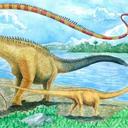
Menjawab sebuah quiz
Tebak Dinosaurus / Skor 8
Tebak Dinosaurus, merupakan subuah quiz untuk belajar nama nama keluarga dinosaurus dengan menjawab pertanyaan pertanyaan yang di ada. Anda akan diminta untuk menjawab nama keluarga dinosaurus dari ga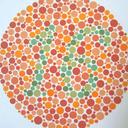
Menjawab sebuah quiz
Test Buta Warna / Skor 90
Test Buta Warna merupakan sebuah quiz yang akan menguji sejauh mana ketelitian mata anda mengenali perbedaan warna. Tugas anda dalam quiz Buta Warna ini adalah kumpulan warna berbeda yang akan memb

Menjawab sebuah quiz
Pengukur Rasa Cinta / Skor 88
Quiz untuk mengetahui sejauh mana rasa cinta kamu terhadap seseorang yang kamu kehendaki. Disalin dari http://bukucinta.com/apps/quiz/2/ ### Hasil Quiz **Skor lebih besar 80** : Anda benar b
Menjawab sebuah quiz
Tes Logika Sederhana / Skor 16
silahkan bagi anda yang ingin menguji kemampuan logika anda, dapat di ketahui melalui soal-soal berikut.
Menjawab sebuah quiz
Family Seratus #1 / Skor 81
Quiz Family Seratus merupakan Quiz ringan yang bisa anda coba untuk menambah pengetahuan anda tentang pengetahuan umum. Soal soal quiz ini diambil dari quiz family 100 yang ada. Tugas anda adalaPattern of Syllable -pattern 1 : always devide after the prefix -pattern 2 : always devide before the suffix -pattern 3 : when one or more consonant are followed by "le" count back three and devide, e.g: maple - pattern 4 : when there two consonant in the middle, you should devide the word between it. -pattern 5: when the consonant appears between two vowels. e.g: silent -pattern 6: divide between compound words, e.g: doghouse. -pattern 7: devide before a single middle consonant when the vowel sound its tong. -pattern 8: devide after the middle consonant (consonant blend its short). pattern 9 : divide between two vowels that do not blend to make one sound, e.g: being.
Kinds of syllables: -Heavy: has branching rhyme. All syllable with a branching nucleus (long vowel) are considered heavy. some languages treat syllables with a short vowel (nucleus followed by consonant (coda) as heavy. for example: cv:c, cvcc, cvc. - Light: has a non-branching rhyme (short vowel). some languages treat syllables with a short vowel (nucleus) followed by a consonant (coda) as light. forexample: cv, cvc - closed: Ends with a consonant coda. forexample: cvc, cvcc, vc - Open: Has no final consonant. forexample: cv
Syllable (suku kata), merupakan bagian dari sebuah kata yang dapat langsung diucapkan. e.g: plan, car, moun-tain, etc. syllable dapat dikelompokan menjadi beberapa jenis, yaitu: a. Monosyllable: kata-kata yang terdiri dari satu suku kata saja, misalnya: high, smart, big, tall, clean, etc. b. Disyllable: kata-kata yang terdiri dari dua suku kata, misalnya: cra-zy, hap-py, la-zy, etc. c. Trisyllable: kata-kata yang terdiri atas tiga suku kata, e.g: dif-fe-rent, etc. d. Polysyllable: kata-kata yang terdiri dari empat suku kata atau lebih, e.g: e-xa-mi-na-ti-on
Sedang Belajar


